
| Literature link | GPT Summary | Evidence category | Disease type |
|---|---|---|---|
| 38397886 | Omentin is an adipokine primarily produced by visceral fat tissue and exists in two isoforms, omentin-1 and omentin-2. Omentin-1 is predominantly secreted by the stromal vascular fraction cells of white adipose tissue (WAT), especially in visceral depots such as epicardial adipose tissue. Emerging evidence highlights omentin-1’s critical role in regulating glucose homeostasis, offering potential therapeutic benefits for obesity and diabetes management. Moreover, omentin-1 has been implicated in atheroprotection and anti-inflammatory effects, suggesting its role in cardiovascular health. This review discusses the therapeutic potential of omentin-1 in addressing metabolic disorders, focusing on its regulatory effects on glucose metabolism and cardiovascular protection. |
Mechanism |
Inflammatory |
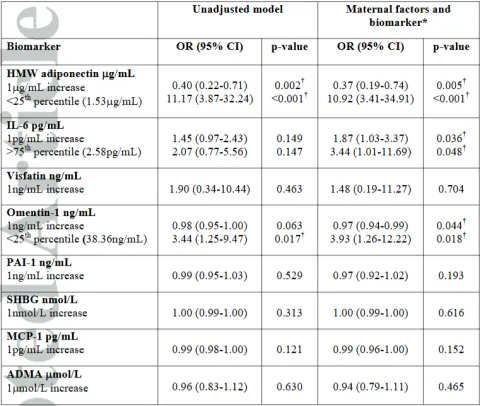
| 28806491 | This study explored the relationship between altered levels of adipocytokines and inflammatory markers during early pregnancy and the subsequent development of gestational diabetes mellitus (GDM). Samples were collected from high-risk pregnant women, and various biomarkers were measured. After adjusting for several maternal factors, the study found that decreased levels of HMW adiponectin and omentin-1, along with increased levels of IL-6, were significantly associated with the development of GDM. These findings suggest that these biomarkers could improve early risk prediction for GDM, potentially enabling early intervention and better management of the condition. | Risk factor | GDM |
| 16531507 | This study identifies a novel visceral fat-specific adipokine, named omentin, which may play a role in regulating insulin sensitivity. The researchers sequenced 10,437 expressed sequence tags (ESTs) from a human omental fat cDNA library and discovered omentin as a secretory protein expressed predominantly in visceral adipose tissue. Omentin mRNA was found to be abundant in omental tissue compared to subcutaneous (sc) fat, and was expressed in stromal vascular cells rather than adipocytes. Protein analysis revealed that omentin, a 313-amino-acid peptide, contains a secretory signal sequence and a fibrinogen-related domain. Recombinant omentin enhanced insulin-stimulated glucose uptake in both sc and omental adipocytes, with the effect being more pronounced in sc fat cells. Additionally, omentin increased Akt phosphorylation, suggesting it enhances insulin signaling. The findings highlight the potential role of omentin in modulating insulin action and its potential contribution to the metabolic dysfunction observed in visceral obesity. | Mechanism | Insulin resistance |
RF's name
Omentin-1
RF's type
protein